
Ingredients (Serves 6)
3 lobsters (2 lbs each)
1 cup flour
1 cup cornstarch
1 bulb of garlic
3 tbsps ginger
6-7 stalks of green onion
1 stick butter
1 tsp honey
3 dashes of fish sauce
1 tbsp soy sauce
1 tbsp oyster sauce
1 tbsp paprika
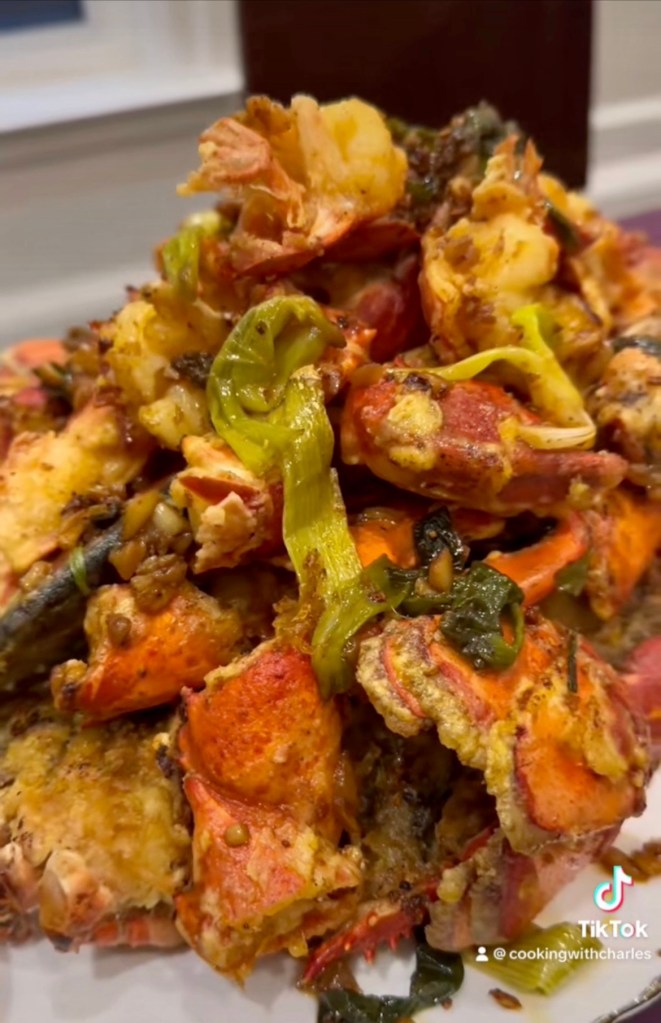
My favourite Chinese lobster dish is a twist on the classic green onion and ginger version found at many Chinese restaurants. Adopting the batter recipe I use for my Korean fried chicken not only increases the umami flavours when accompanied with fish sauce and oyster sauce, but with the addition of paprika and chili flakes, creates a delicious seafood marinade, the perfect accompaniment for any seafood dish.
Step 1: Preparing the Lobster
I like using lobsters which are 1-1.25 lbs each, as the meat is most tender and sweet at this size. The canning lobsters are a bit too small and the really large lobsters I find don’t taste as sweet and fair on the tougher side being more chewy.
Chopping up the lobster is a lot of work. I stick a chopstick up the back of the lobster to release the pee so it doesn’t ruin the meat. Then I take a knife and slice the lobster head to kill it. I twist the lobster tail off and slice the tail down the middle and across creating a cross section. Ensure you remove any poo sacks. Then I rip off the claws and chop at each knuckle and crack the claws and each knuckle.
Chop the head in half and rip off all the small legs. Be careful with the claws and legs. Even though you have killed the lobster, the tail and claws will still move.
Step 2: Batter and Fry
The batter is a 1:1 ratio of flour and cornstarch. This is a typical Korean style batter used for Korean Fried Chicken. I like the texture of better when compared to the traditional recipe that uses corn starch only.
Combine the flour and cornstarch and mix. Then dust each lobster piece.
Tip: Knock off any excess flour off each piece so that it maintains a thin crust.
Heat up vegetable oil (or any vegetable oil with a high heating temperature) to 350F. I use a stock pot and fill it up 1/4 full of oil.
Tip: Using a tall stock pot to fry in give space for the oil to bubble up. Overfilling a pot of hot oil will create a huge mess if it boils over and spills everywhere.
Start throwing in pieces into the oil. Wait 30 seconds at least in the oil until the crust sets before moving the pieces. Once the lobster floats to the top, it is ready! Heavier claws can be tricky as some may be so heavy they won’t float when done. I use a meat thermometer in the claw meat; as long as it is 160F I know it is ready.
Fry in small batches and place the finished pieces on a rack or on a tray with paper towel.
Step 3: Making the Sauce
Dice up the garlic and ginger.
Slice the green onions into 2 inch pieces.
Fry the garlic and ginger in a wok with oil until fragrant. Add in butter, green onions, paprika, soya sauce, oyster sauce, fish sauce and honey. Combine until bubbling and set aside.
Tip: Sometimes it is easier to make the sauce first in advance before starting the lobster.
Step 4: Sauce the lobster
Heat up a pan and add a bit of the oil you used to fry the lobster with. Then add some sauce and toss the lobster into the sauce. I like using a wok and like saucing it in batches. Stack the sauced pieces on a large tray and stack it high for the lobster mountain effect and serve!
 Cooking with Charles